Monday, January 7, 2013

KENYA: POACHERS SLAUGHTER A FAMILY OF ELEVEN ELEPHANTS FOR THE ASIAN MARKET

 
It's a good thing I have no power. If I did, I would ensure that these butchers received the appropriate punishment - the removal of their vital statistics.
 
Do not buy anything made of ivory. There is blood and pain and sorrow on that jewellery, on those tusks. Those items are trophies of tragedy.
 
Phyllis Carter
 

Poachers kill 11 elephants in Kenya

A gang of about 10 attackers hacked off the elephants' tusks in Tsavo East National Park on Saturday, wildlife officials said. Photograph: Reuters
 
A gang of about 10 attackers hacked off the elephants' tusks in Tsavo East National Park on Saturday, wildlife officials said. Photograph: Reuters
 
Poachers killed a family of 11 elephants in the biggest single mass shooting of the animals on record in Kenya, wildlife officials said today.

A gang of about 10 attackers hacked off the elephants' tusks in Tsavo East National Park on Saturday, officials said - the latest sign of a resurgence of mostly Asian demand for ivory jewellery and ornaments.

"(It) shows the great lengths these criminal cartels are ready to go to get ivory. It's really tragic," Kenya Wildlife Service spokesman Paul Udo told Reuters via Twitter.

He said it was the worst single incident of its kind recorded in the East African country. Elephant poaching in Kenya declined sharply after 1989 when the government banned trade in ivory.

But there has been a rise in the illegal practice in recent years. Demand for ornamental ivory is rising fast in Asia in tandem with growing Chinese influence and investment in Africa.

The Kenya Wildlife Service said foot, dog and aerial units were hunting the gang.

"The entire family of 11 elephants have been confirmed poached and tusks chopped off. All the carcasses had bullet wounds," the service said in a statement.

In May, 359 tusks weighing 1.6 tonnes impounded in Sri Lanka were found to have come from Kenya's Mombasa port.

Police found 214 tusks worth $1.32 million hidden in a coffin and fertiliser bags in neighbouring Tanzania in October. The force said smugglers had planned to transport the ivory to Kenya for onward shipment to Asia.

Elephant learns to 'speak Korean' | 02/11/2012

irishtimes.com - Last Updated: Monday, January 7, 2013, 16:51

http://www.irishtimes.com/newspaper/breaking/2013/0107/breaking46.html 


IS THERE A "FREE PRESS" IN AMERICA TODAY? - SENATOR BERNIE SANDERS

 
The only free press we have left is the Internet. We must protect it - and ourselves.
 
Phyllis Carter
 
 
FACEBOOK
January 7, 2013
 
Today's news from Sen. Bernie Sanders (I-Vt.):

Media Monopolies: According to U.S. Sen. Bernie Sanders – an independent from Vermont and a leading opponent of media consolidation – 50 companies owned 90 percent of the American media in 1983. Today, that same 90 percent is controlled by six companies: GE, News Corp., Disney, Viacom, Time Warner and CBS. "In short, it amounts to a monopoly on what we hear, and what we view, on TV and radio," Jim Martin wrote in a Denver Post column critical of a Federal Communications Commission proposal to relax rules on media ownership.


CHINESE JOURNALISTS - THE EYES OF THE WORLD ARE WATCHING SOUTHERN WEEKLY

 
Chinese in rare protest outside newspaper over censorship
 
Scores of supporters of China's Southern Weekly, one of the country's most liberal newspapers, have demonstrated outside its headquarters in a rare protest against censorship.
Demonstrators gather outside the headquarters of the Southern Weekly newspaper in Guangzhou, Guangdong province Photo: REUTERS/James Pomfret

Witnesses said up to 200 people converged outside the Guangzhou newsroom of the Southern Weekend newspaper demanding an end to the stifling censorship of their country's media.

Photographs posted on social media showed demonstrators carrying signs calling for "free press, constitutional government and democracy."

The protest, which ended peacefully, was triggered by an acrimonious dispute between government officials and journalists from the Southern Weekend newspaper who claim censors have been conducting an increasingly aggressive clampdown on their work since last year.

The crisis exploded into the open on New Year's Day after Southern Weekend reporters accused Tuo Zhen, Guangdong province's propaganda chief, of transforming a lengthy newspaper editorial calling for political reform into a gushing homage to China's Communist Party.

According to an analysis by the University of Hong Kong's China Media Project, the original version argued Chinese citizens should be allowed to "voice their criticisms of power loudly and confidently." The altered text, however, was less critical and was published under the headline: 'We Are Now Closer to Our Dream Than Ever Before'.

David Bandurski, the China Media Project editor, said Mr Tuo's "in your face [and] offensive" intervention had proved the final straw for many of the newspaper's censorship-weary staff, who reportedly decided to go on strike on Sunday.

The newspaper's journalists believed propaganda officials had broken "a gentleman's code of how you do and don't control the media," Mr Bandurski added. "If they don't push back what will be left of their paper?"

The crisis escalated last Friday when journalists publically slammed Mr Tuo's "brutal", "ignorant" and "catastrophic" intervention.

Dozens of leading academics then followed suit, using an open letter to call on Guangdong's new party chief, Hu Chunhua, to sack Mr Tuo for his "overbearing actions." He Weifang, a legal expert from Peking University and one of the letter's signatories, said the incident was a "challenge to the new central leadership." "So far they have not displayed their stance on political reform. This time, public anger may well test the new leadership." On Monday, one week after the adulterated editorial was published, protestors took to the streets outside the newspaper's Guangzhou HQ.

In an apparent allusion to the death of press freedom, several carried yellow chrysanthemums.

One protestor, Ah Qiang, told the Daily Telegraph the crisis was about more than newspapers.

"This involves not just one media outlet - Southern Weekend - but everyone. It is everyone's business. [It is about] everyone's rights," he said.

Mr Bandurski, from the China Media Project, said the controversy now posed serious questions of the direction China was likely to move in under incoming president Xi Jinping.

"It is not just a media story anymore. It is about what direction China is heading in," he said.

"Ever since the 18th Communist Party Congress [Xi] has touted himself and the new top seven leaders as representing a new style of leadership and this has been pushed very heavily by the state media." But while media reports had painted Xi as a "Spartan, no-nonsense and more open" leader, the so-called "New Year's Greeting" episode had led many to doubt that.

"These are signs that look right now like steps backwards not steps forward," Mr Bandurski said.

Mr He, from Peking University, said it was too early to say if Mr Tuo would be sacked or what consequences the newspaper's journalists might face.

But the central government's reaction would give an early indication of what ordinary Chinese could expect from their government over the coming decade, he added.

Shi Anbin, a professor of media studies from Beijing's Tsinghua University, said the incident underlined the "ever-growing tension" between Chinese journalists and their government.

But the crisis, coming as China's new leadership took power, could provide "an opportunity of initiating genuine press reform in China", he added.

So far Beijing has sought to play down the incident. "There is no censorship of the media in China," a foreign affairs spokesman said last week.

Related Articles

http://www.telegraph.co.uk/news/worldnews/asia/china/9784715/Chinese-in-rare-protest-outside-newspaper-over-censorship.html


Sunday, January 6, 2013

YOUCEF NADARKHANI - PASTOR ARRESTED IN IRAN - DANGEROUS TO BE CHRISTIAN

 
It can be dangerous to be Christian - in Iran and in Montreal, Canada
 
Nadarkhani 3

This Iranian Christian pastor had been imprisoned in Iran for (allegedly) converting 
from Islam to Christianity, and was released in September having been acquitted of apostasy. In an unexpected twist, the Pastor was re-arrested on Christmas Day and returned to Lakan Prison in Rasht, where he spent almost three years on death row.
 
According to Fox News, the charge is 'that he must complete the remainder of his sentence', which is no charge at all: it is a summary sentence meted out in pure spite (reinforced by the timing of the arrest to cause maximum pain to his wife and young children).For some reason, the court's prior decision that Pastor Nadarkhani's remaining 45 days could be served on probation has been overruled, and that time must now be served back in prison. It is worth mentioning that his attorney, Mohammed Ali Dadkhah, has also been imprisoned and remains in Iran's notoriously brutal Evin Prison where his health is rapidly deteriorating. He has been incarcerated for advocating Youcef Nadarkhani's case and other human rights cases.

And news has now reached his Grace of Pastor Benham Irani, arrested last year and sentenced to six years' imprisonment on charges of 'action against the state' and 'action against the order' (ie being a Christian). He is now being held in Ghezal Hesar, another of Iran's most notorious prisons, where he is reportedly beaten regularly by prison authorities and other inmates, and as a result can barely walk. He is not expected to survive another five years in prison in his current condition.
 
With Christianity being incrementally eradicated from the Middle East, the world needs to stand up and say that a man cannot be put to death or imprisoned because of his faith. It was international pressure which kept Youcef Nadarkhani alive in prison – especially the intervention of the governments of the US, UK, France, Germany and Mexico, who were in turn pressured by believers using social media.It is time for us to act again – on Youcef's behalf and also that of his attorney Mohammed Ali Dadkhah and Pastor Benham Irani. We must continue to keep up the pressure: pass the word along via blogs,
 
Facebook, Twitter (#TweetforYoucef) and, of course, in churches and in prayer.
 
 
In Montreal, Quebec, Canada, on October 7, 1996, I became a crime victim - because a jealous, greedy thief hated the fact that I had chosen to be baptized.
 
See the details at -
DAWN MCSWEENEY - THE HAPPY TREE YOGA GURU THIEF
CHRISTIANITY WORSE THAN CANCER
 
Phyllis Carter
 

SLAVERY ENDED IN THE U.S.A. IN 1865 - BUT WOMEN WORLD-WIDE ARE STILL SLAVES


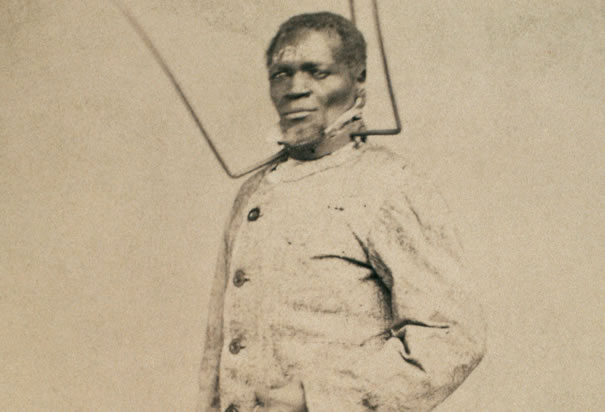
Slave Punishment: Wilson Chinn, a freed slave from Louisiana, poses with equipment used to punish slaves. Such images fueled Northern resolve against slaveholders during the American Civil War (photographed in 1863). (Photo Credit: CORBIS) - http://www.history.com/topics/slavery/photos#slavery-slave-life

 
The 13th amendment,
Passed by the U.S. Congress
On January 31, 1865
And ratified on December 6, 1865,
Ended legal slavery in America.
 
But girls and women around the world
Are still held and treated as slaves.
 
What are we going to do about it ?
 
Silence implies consent.
 
If you do nothing, say nothing,
You are guilty.


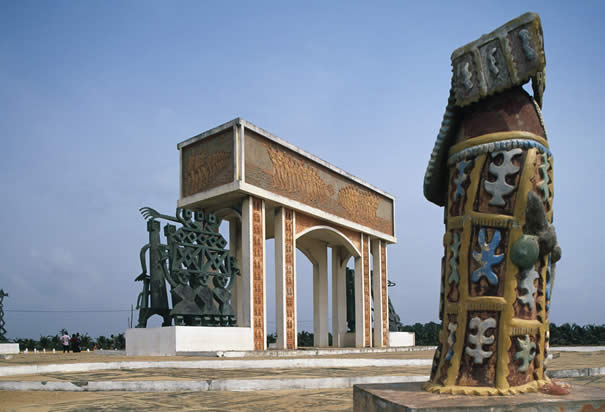
Point of No Return: This monument, along the "Road of the Slaves" in the West-African country of Benin, commemorates the countless Africans who were kidnapped and sold as slaves between the 16th and 19th centuries. (Photo Credit: Atlantide Phototravel/Corbis) - http://www.history.com/topics/slavery/photos


VICIOUS RAPES IN INDIA AND AROUND THE GLOBE - WE LET IT HAPPEN BY OUR SILENCE

 
THE WAR AGAINST WOMEN
 
We are quick to condemn Sharia law that justifies the most horrendous murders of young women - for the crimes of thinking, wanting to learn, wanting to be free of the tyranny of jealous, greedy husbands, brothers, fathers, and the complacency of mothers.
 
But we - "democracy" to "democracy"  - ignore the atrocities committed against women in India. Only in the last little while, with reports of the monstrous rape and murder of the young woman on a bus, have we begun to take notice.
 
But this is not new. We have just been deliberately, selfishly, blind and deaf to the reality of women - and even little children - being raped and slaughtered all over the globe. It happens all the time in Thailand. It happens all the time in Sudan. It happens because we let it happen - by our silence.
 
Let old acquaintance be forgot in 2013 and this nightmare will never end.
 
Phyllis Carter
 
The rapes that India forgot

4 January 2013

Last month's brutal gang rape of a young woman in the Indian capital, Delhi, has caught public attention and caused worldwide outrage. But here, the BBC's Geeta Pandey in Delhi recalls other prominent cases which made the headlines, then faded from public memory.

On most days, Indian newspapers report shocking new atrocities - a 10-month-old raped by a neighbour in Delhi; an 18-month-old raped and abandoned on the streets in Calcutta; a 14-year-old raped and murdered in a police station in Uttar Pradesh; a husband facilitating his own wife's gang rape in Howrah; a 65-year-old grandmother raped in Kharagpur.

But in a country where a rape is reported every 21 minutes, even these most horrific of crimes soon get forgotten - except by the victims and their families.

They are left to fight their long lonely battles for justice which, more often than not, is denied to them.

Travesty of justice
One of the most painful and lingering cases is that of the Mumbai nurse Aruna Shanbaug.

Sodomised by a cleaner in the hospital where she worked, the 25-year-old was strangled with metal chains and left to die by her attacker, Sohanlal Bharta Walmiki, on 27 November 1973.

She was saved and survives, but barely so. For the past 39 years she has been lying in a hospital bed in a vegetative state, brain dead, unable to recognise anyone, unable to speak, unable to perform even the most basic of tasks.

"He was not even charged for raping her," says journalist and author Pinki Virani, who wrote Aruna's Story, a book on the nurse's plight.

So Walmiki was given a light seven-year-sentence for robbery and attempted murder.

In what can be described as a real travesty of justice, while a brain dead Aruna remains confined to a hospital room, her attacker roams free - out of jail and able to rebuild his life.

Ms Virani told the BBC that she tried hard to track him down, but remained unsuccessful.

"I was told that he had changed his name and was working as a ward boy in a Delhi hospital. The hospital where he had sodomised Aruna and left her in this permanent vegetative condition had never kept a photo of him on file. Neither did the court papers," she said.

Aruna is not alone - her story is repeated with a frightening regularity across the length and breadth of the country.

India shamed
Violence against women is deeply entrenched in the feudal, patriarchal Indian society, where for the rapist, every woman is fair game.

In 2003, the country was shamed when a 28-year-old Swiss diplomat was forced into her own car by two men in south Delhi's posh Siri Fort area and raped by one of them. The rapist, whom she described as being fluent in English, spoke to her about Switzerland and is believed to have even lectured her on Indian culture.

In 2004 in Manipur, 32-year-old Manorama was taken away from home by the soldiers of Assam Rifles who accused her of helping insurgents. A few hours later, her mutilated body was found by the roadside, her pelvis riddled with dozens of bullets.

Last year, 14-year-old Sonam was raped and killed inside a police station in Uttar Pradesh.

During the 2002 riots in Gujarat, a number of Muslim women were gang-raped, and campaign groups routinely accuse the security forces in Indian-administered Kashmir and the troubled north-east of using rape as a weapon to punish the entire community.

In May 2009, Indian-administered Kashmir witnessed 47 days of violent protests and strikes after two young women were raped and murdered, allegedly by police, in Shopian town.

And in Chhattisgarh, Soni Sori has been in police custody since October 2011 when she was arrested on charges of being a courier for the Maoists. She has alleged in the Supreme Court that while in custody, she has been raped and stones have been shoved inside her vagina.

Most of these victims are still waiting for justice, sometimes years after the crimes have been committed.

The rapists sometimes escape with a light sentence because a judge accepts their argument that they committed the crime because they were drunk, or that they were living away from their family, or they had a family to look after, or that the accused was a high-caste man who could not rape a Dalit - low caste - woman.

'No magic formula'
The Additional Solicitor General of India, Indira Jaisingh, says the current rape laws in the country are far from adequate and the "process of justice delivery is too slow and the rate of conviction too low".

"We have to improve the crime investigation methodology, we have to make it more scientific and quick. In India a case takes so long to conclude that witnesses get dissipated, memory frays and conviction becomes tougher."

She says many cases do not even get to court because there is a stigma attached to rape, and families would often discourage their daughters from complaining.

Ms Jaisingh says that just drafting a better law will not be enough, it is society which has to change.

"There is no magic formula to deal with the problem of rape. There's a bias that operates in the mind of decision makers - stereotyping women, blaming the victim, trying to find out if she invited the rape."

But every once in a while, an incident happens which ignites a spark.

The first such incident in India occurred in 1972 when Mathura, a 16-year-old tribal girl, was raped by two policemen inside a police station.

The courts set free the accused - they said she did not raise an alarm, she was not injured, and since she was sexually active, she would have "voluntarily" consented to sex.

Howls of angry protests from activists led to the government amending the anti-rape law in 1983 to accommodate the provision that if a victim says that she did not consent to sex, the court will believe her.

The outpouring of anger and grief after the recent Delhi incident has also given rise to hopes that things are about to change in India.

The government has formed a committee under retired Supreme Court Justice JS Verma to take a fresh look at the anti-rape law.

Justice Verma has invited suggestion from the public and his inbox is reported to be full of demands for the death penalty and chemical castration for rapists. Many are also calling for longer jail sentences of up to 30 years or even life in jail.

But campaigners say laws alone may not be able to solve the problem in a society which treats its women as "second-class citizens" and regards them inferior to men.

They say until social attitudes change and women are respected and treated as equals, the gains from the protests will be shortlived.


Saturday, January 5, 2013

14 YEAR OLD GIRL KILLED BY SHARIA LAW - PUNISHMENT FOR BEING RAPED


SAY IT ISN'T SO. TELL US THIS ISN'T TRUE.

Sharia Brutality on a Raped Girl in Bangladesh

by Salah Uddin Shoaib Choudhury

A girl named Hena, age 14, was murdered by local Sharia Committee at Shariatpur in the southern part of Bangladesh. The daughter of poor farmer named Darbesh Kha, Hena was forcefully abducted and raped on January 30, 2011 during late at night by Mahbub, age 40.

During this abuse, villagers arrived in response to the cries of Hena. At the same time, the imam of the local mosque, a man named Mofiz Uddin, and a few teachers of Madrassa [Koranic School] led by Saiful Islam, also arrived; instead of taking any action against the rapist, the Muslim clergymen took Hena inside the Madrassa and locked her in a room.

The following day, the same imam and some of members of the Sharia Committee in the village sat for a trial of Hena on charges of "immoral sexuality" before marriage. Later the committee decided to punish Hena with 200 lashes, and took financial penalty of only TK. 10,000 [US$ 150] from the rapist.

During the lashing, Hena became unconscious; when she was rushed to the nearby village hospital, the attending doctors declared her dead.

After lodging a murder case with the local police station, a few influential members of the local mosque committee, as well as Sharia Law Committee, are telling members of media that Hena was involved in "immoral activities," and the villagers caught her red-handed while she was having physical relations with a villager; and that later the Sharia Law Committee punished Hena for such anti-Islamic and immoral activities.

They denied admitting that Hena died during being lashed. Further, a few political leaders in the area are frantically trying to save the rapist and the members of the Sharia Law Committee.

Sharia Law Committees are becoming influential in a number of Muslim nations. Although the committees are illegal under local laws, there has never been any action against such groups by any government: these Sharia Law Committees are comprised of influential leaders of the locality as well as members of various political parties and fronts.

On average, in Bangladesh, several hundred rural females fall victim to such rulings and lashings, as well to other forms of "Islamic Penalties," as Shariah Law Committees become increasingly prevalent.

February 2, 2011 at 4:15 am

http://infidelsarecool.com/2011/02/bangladesh-shariah-court-kills-14-year-old-girl-for-the-crime-of-being-raped/